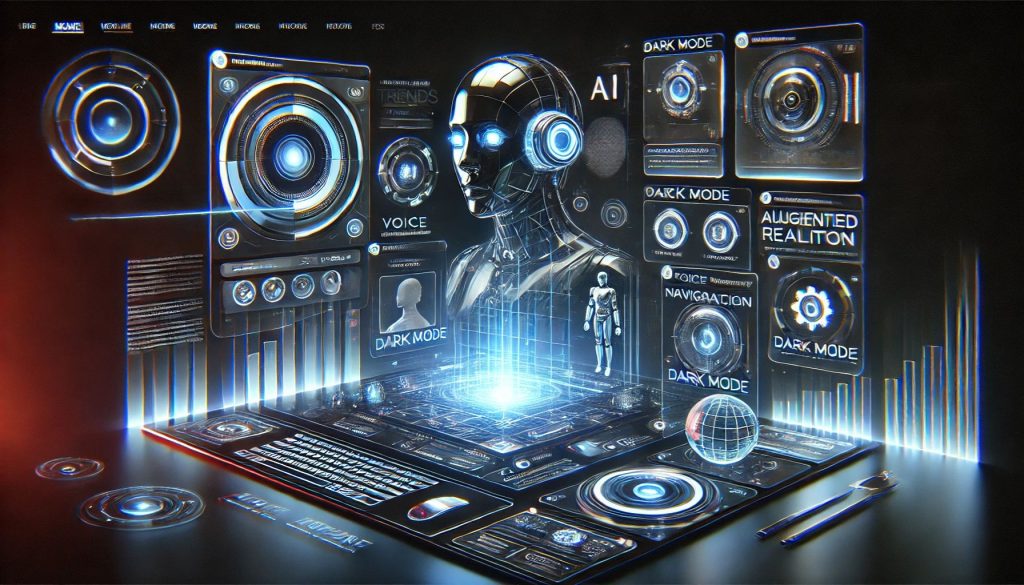
The digital world is evolving at an unprecedented pace, and web design is no exception. As businesses compete for user attention, staying ahead of trends and leveraging emerging technologies is essential for long-term success. Let’s explore the key trends and technologies shaping the future of web design.
AI-Driven Web Design
Artificial intelligence is revolutionizing how websites are built and optimized. From AI-powered chatbots to automated design tools, AI enhances personalization, improves user experiences, and streamlines web development.
Voice User Interfaces (VUI)
With voice assistants like Alexa and Google Assistant becoming mainstream, voice-activated web experiences are the future. Websites need to integrate VUI for seamless navigation and accessibility.
Augmented Reality (AR) & Virtual Reality (VR) Integration
Immersive experiences are taking center stage. AR and VR allow brands to offer interactive product visualizations, virtual tours, and engaging user interactions that go beyond traditional interfaces.
Web3 and Decentralization
The shift towards Web3 technologies, blockchain, and decentralized applications (DApps) will redefine data privacy, security, and digital ownership, giving users more control over their online presence.
Hyper-Personalized UX
AI and data analytics enable highly tailored user experiences. Websites will dynamically adapt content, recommendations, and layouts based on user behavior and preferences, improving engagement and conversions.
Minimalist and Dark Mode Evolution
Clean, distraction-free web designs are gaining traction, with dark mode becoming a staple. This trend enhances visual comfort, saves battery life, and aligns with modern aesthetics.
5G and Ultra-Fast Web Experiences
With the expansion of 5G networks, websites must be optimized for speed, offering seamless multimedia content, instant loading times, and improved mobile experiences.
No-Code and Low-Code Development
Building websites is becoming more accessible with no-code and low-code platforms. These tools empower businesses to create professional sites without deep technical expertise.
Cybersecurity and Data Privacy
With increasing cyber threats, security is a top priority. Future-ready web design must incorporate stronger encryption, multi-factor authentication, and GDPR-compliant data protection.
Sustainable Web Design
Eco-friendly web practices are emerging, with lightweight coding, optimized servers, and green hosting solutions reducing the environmental impact of digital platforms.
Micro-Interactions and Smart Animations
Subtle animations and micro-interactions enhance user engagement by providing real-time feedback, guiding navigation, and making web experiences more intuitive.
Progressive Web Apps (PWAs)
PWAs combine the best of web and mobile apps, offering fast loading speeds, offline functionality, and an app-like experience without requiring downloads.
Ethical Web Design & Accessibility
Inclusion is key. Websites must be accessible to all users, including those with disabilities, through improved contrast, keyboard navigation, and assistive technologies.
Final Thoughts
The future of web design is all about smarter, faster, and more immersive digital experiences. Businesses that embrace these trends will stay ahead in the digital race.